
-

Another reason a green tea might turn bitter is it may have been steeped too long.
Basically steep the tea until it tastes good to you. Here are some very general guidelines (and there are lots of exceptions to this).
Recommended steeping times for different tea types. Tea Type Recommended Steeping Time Black Tea 4–6 minutes Dark Tea
(and Puer)10 seconds–10 minutes
Steeping times vary considerably. See our Puer tea preparation guide for detailed recommendations.Oolong Tea 2–4 minutes Green Tea
(and Yellow)1–3 minutes White Tea 1–4 minutes Herbal Tea 4–10 minutes One observation: typically the smaller the tea particles (like Classic Iced Tea) the quicker the tea will infuse and steep. And the larger the leaf particles (like Ceylon Lumbini OPA used in our Ceylon Seafarer) the longer the tea will need to steep and infuse.
Also, be sure to visit us on Facebook for a chance to win a year of free tea!

View Post About Seven Steps to Great Tea: Step 5 – Time Your Steep
-

If you’ve ever had green tea that was bitter, chances are the water was too hot. Water temperature is important–you would never bake a cake 50 degrees hotter or colder than the recipe called for–you should be just as diligent with your tea.
Recommended Water Temperatures for Steeping Different Tea Types. Tea Image Tea Type Recommended Water Temperature 
Black Tea Boiling (212°F)
You can hear and see the bubbles breaking the surface of the water; your kettle should be whistling like crazy.
Dark Tea
(and Puer)200–210°F
Just short of a rolling boil, "fish-eye" bubbles are forming on the surface and the kettle is beginning to hiss.
Oolong Tea 190–203°F
The steam should be strongly coming out of your kettle's spout in a steady column, but bubbles should not be breaking the surface.
Green Tea
(and Yellow)175–185°F
The steam should be coming out of your kettle's spout in a gentle wafting/wisping motion—like steam rising off the frozen surface of a Minnesota lake in February.
White Tea Brewing temperatures vary widely.
Classic steeping is 175°F, when the very first hints of steam begin to rise from the kettle. We have also found that some white teas develop more flavor when brewed at 180–190°F.Basically, the hotter the water, the more "flavor chemicals" (including any bitter flavors) you will pull into the steep water.
The instructions above are general guidelines, and there are many exceptions. All TeaSource packages come with steeping suggestions printed on the label. These are simply meant to be starting points. Feel free to experiment and find what suits you best.
Also, be sure to visit us on Facebook for a chance to win a year of free tea!
View Post About Seven Steps to Great Tea: Step 4 – Use the "Correct" Water Temperature
-

Use 3 grams per 8 ounces water.
For the non-geeky tea drinker, this is about 1 rounded tsp of loose tea. We're talking about a measuring teaspoon, not the teaspoon in your silverware set. That’s why they call it a teaspoon.
If you have an extremely bulky or fluffy tea, we suggest using a heaping tsp or even two teaspoons.
If you have an extremely fine tea, like Classic Iced tea, we would only use 1 level teaspoon. This is because a fine tea has more weight with less volume; while a bulky tea needs more volume to have the same amount of weight.
Also, be sure to visit us on Facebook for a chance to win a year of free tea!
View Post About Seven Steps to Great Tea: Step 3 – Measure Your Tea
-

If your water tastes good without tea, chances are it will taste good with tea. And the opposite is true also. Steeped tea is over 95% water, so this matters a lot.
A few tips:
- If your water does taste bad out of the tap, most filters available work pretty well: Britta, Pur, etc.
- Avoid distilled water, your tea will taste flat.
- Bottled water and spring waters are usually ok, although keep in mind that Evian is naïve spelled backwards.
Also, be sure to visit us on Facebook for a chance to win a year of free tea!
View Post About Seven Steps to Great Tea: Step 2 – Use Good Water
- If your water does taste bad out of the tap, most filters available work pretty well: Britta, Pur, etc.
-

"Using good tea" almost always means using loose leaf tea. There are some reasonably decent tea bag brands, but we don't know of any great tea (or even very good tea) that comes in a tea bag.
This first step doesn’t necessarily mean expensive tea. There are some excellent teas that can be had for as little as 15 cents per cup, like our Empire Keemun. But buy your tea from trusted vendors.
Keep following along with us this week as we talk about how easy it is to make the perfect cup of tea!
Also, be sure to visit us on Facebook for a chance to win a year of free tea!

View Post About Seven Steps to Great Tea: Step 1 – Use Good Tea
-
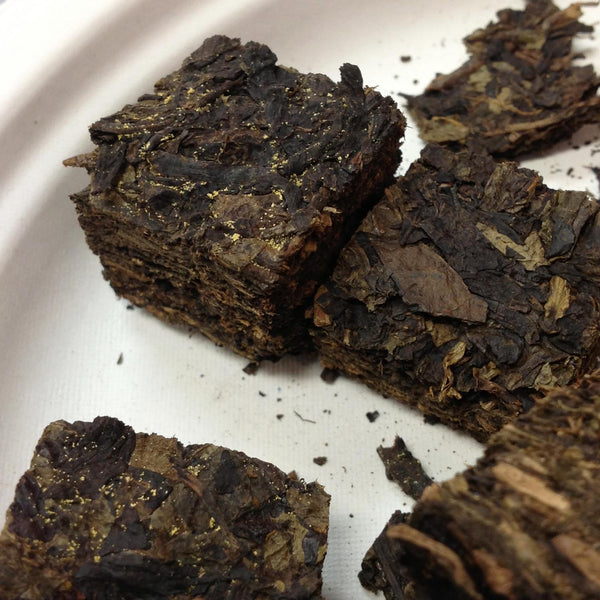
Dark tea is unique because it is the only deliberately aged tea that undergoes a secondary fermentation process. Because of this additional step, it contains an active micro-organism called Golden Flowers (Eurotium Cristatum). This micro-organism is present specifically in Dark tea made in Anhua County, Hunan Province, China. Golden Flowers is actually visible in some Dark teas and looks like tiny yellow flecks. If you want to experience Golden Flowers up close and personal, check out our Fu Cha brick.
Puer, which is a sub-category of Dark tea, contains a different micro-organism called Asper Nigellus. This is due to variation in growing conditions, soil, and geography. Golden Flowers is a relatively new discovery, having just been identified in the last 30 years. To this day, the process of making Dark tea is a closely guarded secret. Here are some quick facts about Anhua Dark tea for all you biochemistry buffs out there:- Significant polyphenol content
- Significant L-Theanine content
- Significant thearubigin & theaflavin content
- Significant polysaccharide compounds
Dark tea is a critical source of minerals and nutrients to people in many areas of China. Over the past several years TeaSource has had the opportunity to work with Ms. Zhang Liumei, tea scientist and co-founder of Yiqingyuan Tea company in Hunan Province. Ms. Zhang created one of our most popular and unique teas, Dark Rose, which is pressed into a small heart shape. She describes it as “a spa in a cup” and she’s right. It’s a perfect introduction to this fascinating category of tea.
