-
Iced tea is the stuff of summer. Everybody knows that. Sweet tea, tea cocktails, tea infused beer, and even tea with ice cream all come to mind as tasty ways to beat the heat. We have regular customers who drink gallon upon GALLON of iced TeaSource Gold in our stores each week, and personally, I don’t know where I’d be without my daily dose of cold brewed Green Mango. I would be hard pressed to find a drink that tastes as good, is actually good for you, and has stood the test of time as well as iced tea. It's almost as American as baseball and apple pie, don't you think?

There are so many creative ways to enjoy cold tea that it’s hard to choose just one angle. Here are a few of our favorite recipes to give you some ideas for your next family gathering or get together. Summer is too short to sweat the small stuff, so slow down and enjoy it with a cup of iced tea.
-Sarah Cedergren
TeaSource ManagerSpiced Ice Kick
6 cups chilled Montana Gold
3/4 cup orange liqueur or 3 tsp. of orange syrup (Torani or Monin works well)
Mix and serve over ice. Garnish with orange slices.Champagne Oolong
Dry Champagne (or sparkling water)
4 tablespoons of dry oolong tea (we recommend Green Dragon)Steep 4 tablespoons of dry oolong tea in 4 cups of cold water in fridge for 6 hours. Strain, cover, and refrigerate for an hour. Pour half a glass of chilled oolong tea, fill the remainder of the glass with champagne.
Strawberry Arnold Palmer
Take 1 can of frozen lemonade concentrate.
Blend into 1 gallon of cold water.
Cold brew one ounce of Strawberry Oolong in the watered down lemonade overnight. Remove tea leaves.
Serve over ice.
Ohau Iced Tea
8 cups brewed TeaSource Classic Iced Tea (black tea), at room temperature
1 cup cranberry juice cocktail
2/3 cup frozen passion fruit juice concentrate, thawed.Use frozen passion-fruit puree (available at Latino grocery stores), could also substitute passion-fruit juice. 1 cup white cane sugar (if using passion fruit puree only)
Optional: a couple of shots of dark rum. Combine all ingredients, stir, and serve over ice.Click here for easy directions on how to make iced tea.
-
From its history in Japanese tea culture to its production and preparation, discover what matcha is and how to make it at home with traditional utensils.
-
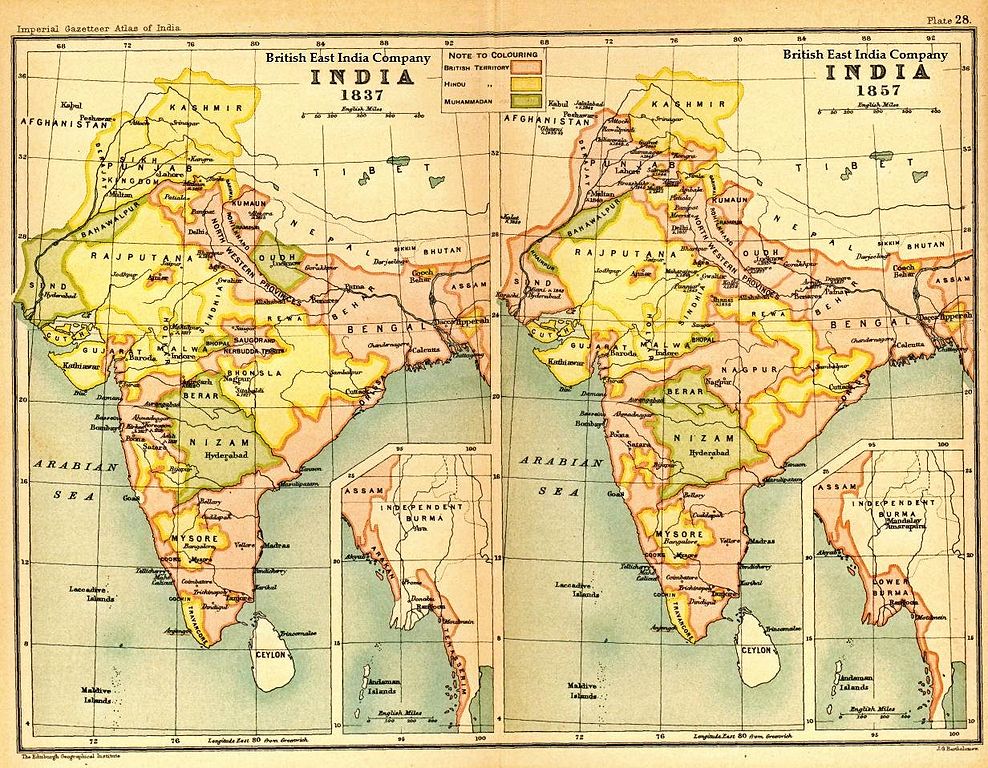
India grows a lot of tea. It is the second largest tea producer in the world (China is first) – making over one million metric tons of finished tea per year. But the story told to us about Indian tea is actually much larger than India (and India is big!). It is also about the British empire; it is about the East India Company and the consequences of global trade; and it is about the influence of the west on the east.

Up into the 19th century, tea plants and the tea trade belonged to China. But the demand for tea was rapidly growing in the west and so were the pressures with the East. Because the Chinese had a monopoly on tea and little interest in European goods, they could demand to be paid in silver, causing the British to run significant trade deficits (an issue America and China are grappling with today).
To reverse the flow of silver back home, the British began selling large amounts of cheap opium (grown in India) to China. Furious at the British for turning their country into opium addicts (and depriving them of silver), the Chinese began confiscating and destroying the British opium supplies. The British retaliated with military force and fought what we now refer to as the first "opium war" of 1839-1842.

While these tensions were escalating, the British discovered an indigenous tea plant (camellia sinensis var. Assamica) growing in India. This was of no significance to the rest of the world until a couple employees of the East India Company began a project to start cultivating these wild tea plants in Assam.
Motivated to find a commercial alternative to Chinese tea, the British had already been experimenting with growing tea in India. The lack of experience and infrastructure (Assam was an undeveloped jungle at the time) prevented any real success up to this point, but these Assam tea plants proved well suited for the warmer climates of India. Through the stubborn persistence of the British (none of this came easy and often ended tragically) and help from imported Chinese knowledge and labor, the cultivation of tea in India became viable – and the proliferation of the Assam plant grew it to the size it is today. As the modern Indian tea industry established, three "official" geographically recognized tea producing regions emerged: Assam, Darjeeling, and Nilgiri.
Assam
The home to India’s native tea plant, Assam was a jungle surrounding the Brahmaputra River valley in east India. It currently produces over 50% of India’s total tea output and Assam teas are noted for being strong, full-bodied, with malty flavors. The indigenous Assamica plant prefers the warm, lush environment of its home and can stay productive most of the year, though 2nd flush teas are often considered the best. CTC teas are common in Assam. CTC, or "crush, tear, curl," teas are machine processed versus orthodox manufacturing. But fine orthodox teas are still available and range from their traditional deep, malty cups to sweet, almost tobacco-like flavors, similar to Yunnan teas (which is not surprising since the cultivars are similar and nearby on the map).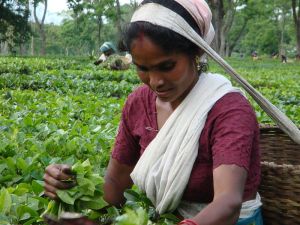
Darjeeling
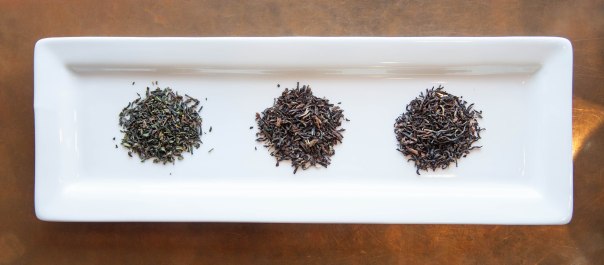
This famous tea produced at the foothills of the Himalayas in Northern India is not only unique among Indian teas, but distinguishes itself from teas grown anywhere else in the world. The British started coming to these picturesque mountains for relaxation and recuperation – the high mountain air was considered healthy and cleansing. But the high altitudes, cooler weather, and well-drained soil proved to be perfect for growing tea – particularly the Chinese tea plant, which prefers this climate over the tropical weather of Assam and Nilgiri. Darjeeling teas are known to steep up light, floral, fresh, and sometimes astringent. They also market the significant seasonal contrasts produced between the first and second flushes. (For more, read our blog post "I’m dealing Darjeeling" )Nilgiri (South India)

The teas of the "Blue Mountains" of Southern India are often overshadowed by the Darjeeling and Assam, but no less important to the story of India tea. Because of the tropical environment, Nilgiri plants (primarily the Assamica variety) will flush year round and are not separated by "flushes" like Assam and Darjeeling teas. Known for their smooth, fruity, gentle nature, the best orthodox teas from Nilgiri happen in the winter months of January and February, where sometimes even a little frostbite from the highest elevations can add unique and desirable complexity to the cup.The above is not comprehensive. There are many details to fill in, many exceptions, and still much to learn. As always, the best way to learn is to taste them, and read more.
-Michael Lannier
TeaSource manager -

Tea pluckers in Sri Lanka
Tea from Sri Lanka is immediately identifiable – bright, brisk, quenching, fruity - except for the fact that after gaining independence from the British, Sri Lanka still sells their teas under the old colonial name “Ceylon.” It proves that the idea of “brand management” goes back a lot further than modern management theory, but for the story of Ceylon tea we don’t have to go that far.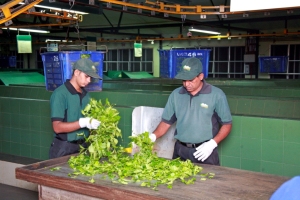
Up until the late nineteenth century, Ceylon was producing coffee, not tea. But the conversion began in 1869 when a parasitic fungus that attacked the coffee plants started spreading across the island. The former Dutch and now British occupiers had been experimenting with tea plants they brought to the island and the coffee blight prompted them to convert land to commercial tea production in place of coffee. British demand was so high for these new teas that by 1900 there were over 300,000 acres of tea planted on the tiny island.
Ceylon teas are noted for their “fruity” and brisk flavors, though this is not why you will often see the words “Orange Pekoe” on a package of Ceylon tea (the name has nothing to do with oranges – even more curious is that no one exactly knows how it got the name “Orange Pekoe”, though there are theories). Orange Pekoe or “OP” is in reference to the leaf grading system used in Ceylon teas (and other countries). In the most simple of definitions (and therefore not without inaccuracies) OP is the longer, whole leaf grade, and BOP – or “Broken Orange Pekoe” - is the broken or smaller leaf grade.
We could get very long-winded and annoyingly academic if we wanted to start listing all the nuances and exceptions within that definition, but it’s more important to note that the grading system is not necessarily a judgment on quality, but rather a categorization of size and appearance.
Though it is tiny in size (approximately the size of West Virginia), Sri Lanka is the fourth largest tea producer in the world, at over 325,000 metric tons per year. Part of this is attributable to its warm, lush, tropical environment that prevents the bushes from going into dormancy. This allows the plants to be picked year round, with some areas experiencing fairly dramatic seasonal variation. Because of the year-round growth, Ceylon teas are not grouped into 1st or 2nd flushes like Indian teas nor have anything similar to the spring tea distinction in China. However, the plants are rested periodically by heavily pruning them back to maintain quality and longevity (the plants can stay productive for approximately 40 years, give or take depending on the region).
Quality control during the withering process.
Though its tea history is relatively short, Sri Lanka is always singled out for its commitment to quality. In the 90’s and early 2000’s, Africa and even a significant portion of India focused on producing more tea instead of great tea. Sri Lanka resisted this trend. Ceylon black teas are consistently some of the finest in world and deserve the attention of anyone with even a casual interest tea.
Beautiful map of Southern India and the island of Sri Lanka, still labeled as “Ceylon."
-

Goomtee Tea Estate in DarjeelingDarjeeling is one of the best known “brands” in tea. Even those who don’t drink or care about tea have at least heard the name. But what is “Darjeeling” tea and why is the name so famous?
For starters, Darjeeling is actually a town/district located at the edge of the Himalayan mountain range in northeast India. It’s not Darjeeling tea if it doesn’t come from this district. But the tea plant is not native to this area. The only reason it grows here goes all the way back to the early 1800’s when the British were trying to figure out how to circumvent the Chinese monopoly on tea. The early growing experiments failed, and a native Indian tea plant was later discovered in Assam (Camellia sinensis var. assamica). But these Chinese teas plants brought to the mountains of Darjeeling eventually took root and thrived. The Chinese plants fared better in the higher elevations and cooler temperatures of Darjeeling and stood out for their unique fragrance and complex flavors (most Darjeeling teas are grown between 2,000 and 7,000 feet). Over time the region has developed an international reputation, which has boosted demand and prices.

The reputation is well deserved and came from a number of carefully managed factors. The Darjeeling Tea Association has protected and promoted the Darjeeling “brand” with a French-like zeal (think Champagne), highlighting their unique terroir (the total of environmental factors), beautiful estates, and seasonal variations. Three seasonal variations define the inherent character and flavor of Darjeeling tea.
First Flush
These teas are produced from the first plucking of the new shoots that appear in the spring (March through mid-April) after the plant has come out of its winter dormancy. Like many spring teas around the world, first flush Darjeeling teas are highly sought after and produce a cup that is light, fresh, aromatic, and possess a fair amount of astringency. The dry leaf will often contain a lot of green color, which comes from a long withering process that removes enough moisture to inhibit oxidation, but makes the tea more fragrant.

Second Flush
This is the summer production of teas from the shoots that follow the first flush. In some respects this is more of a “classic” Darjeeling since it tends to bring out those “muscatel” flavors Darjeelings are famous for. The cup tends to be richer, and more full-bodied. It is usually less astringent than the first flush teas and can come off as almost “fruity.”
Autumnal Flush
This last picking of the season doesn’t always get the same attention as the first two flushes, but great teas can still be produced and sometimes purchased at an excellent value. The autumnal flush teas are typically the most full-bodied of the Darjeelings with a more balanced and less astringent cup.Unblended Darjeeling teas should (in our opinion) clearly identify which estate it came from, which flush, and the leaf grade (a series of letter that notes leaf sizes and quality of pluck). We find most of the fine, orthodox teas coming out of Darjeeling will be graded “TGFOP” or “TGFOP1” (Tippy, Golden, Flowery Orange Pekoe – with the “1” denoting exceptional quality). This has always sounded like a bit of “artistic license” to me, but it’s hard to blame them for wanting to present the tea in the best way possible. Ultimately, the leaf and cup will say what needs to be said.
There’s much more that can be said about these wonderful teas from an exotic location. Much of this was a gross simplification, but it’s easy to get long-winded and off track. For the uninitiated, I hope it gives a basic understanding of what these teas are like, where they come from, and how to identify them.Check out our Darjeeling infographic!
Shop Darjeeling Teas
Enjoy!
-Michael Lannier
TeaSource manager -
Black tea is black tea (as opposed to purple tea) because of oxidation. If you cut an apple (or banana or zucchini etc.) in half and let it sit, within a few minutes the exposed flesh start to turn brown. That’s oxidation.

Turning brown: which is perfectly safe, it’s just oxidation
And that is what happens to make black tea. They roll, crush, tear, cut, and/or curl the tea leaves; this is the equivalent of cutting the apple. Thus they expose the interior of the plant, disrupting the cell membranes to air.
A rolling machine in Sri Lanka, crushing the leaves, making them juicy—the precursor to oxidation.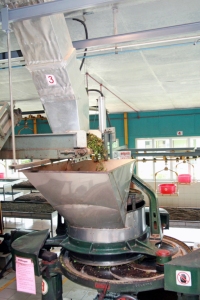
The tea leaves get all juicy, just like an apple gets juicy if you cut it. If they are making black tea, they spread the juicy leaves out on a long flat surface, like a trough, table, or even the floor (using a tarp), and let the leaves turn brown. That's oxidation. If they leave the leaves out long enough, they oxidize fully and become black tea. It is relatively easy to stop or prevent oxidation. Apply gentle heat to the leaves, which kills the enzymes in the leaf and prevents oxidation from occurring, or stops the oxidation at that point. No browning.
Why do tea folks bother with oxidation? Without it, all you would have is white or green teas. I love white and green teas, but if someone took my Grand Keemun away I would go crazy. The date and origin of deliberate oxidation as a process for making black tea is not certain. Fujian has been making what would now be considered black tea since the late Ming dynasty, but large scale production did not take place in China until the 19th century. It is important to understand that for all intent and purposes black tea is NOT drunk in China—at all. They make a remarkable amount and variety of black teas in China, but they don’t drink them. It’s not completely crazy to speculate that oxidation was “invented” by mistake.
What happens during oxidation? The plant gives off H2O (water evaporating) and absorbs extra oxygen from the atmosphere which, with the enzymes in the leaf, triggers a whole bunch of chemical reactions, causing the leaf to turn black/brown, the flavor and aroma to change, etc. etc.
Tea Geek facts about tea oxidation:
- If you really want to be annoyingly literal about it, ALL tea goes through some degree of oxidation, albeit, sometimes a VERY minor degree of oxidation. Because oxidation begins the moment the leaf is plucked from the tea plant.
- -White and green tea both go through probably less than 5% oxidation- basically just what happens during transport and handling-- in fact they are trying to prevent and arrest oxidation. Oolongs can be oxidized through a large range, anywhere from 12- 90%.
- Black teas typically go through close to 95-100% oxidation
- Teas going through oxidation smell AMAZING: intoxicating, addictive, intense, sweet, fruity, alive….
- When black teas are going through oxidation, the leaves are spread out on a surface, maybe a table--that's called the "dhool" table.
- Oxidation is fast, for whole leaf teas it can be up to four hours or so. For a small particled tea (CTC), as little as 90 minutes.

A dhool table (or trough) in Ceylon, the tea would be spread out across these areas.
And yes, there is a purple tea. In fact, there are two kinds of purple tea, both are real tea from the camellia sinensis plant- one from Africa and one from China. Watch this blog for more info.
-Bill